03 / The Build Log / Career Tech SaaS
CareerCraft
AI as a product layer, not a chat window
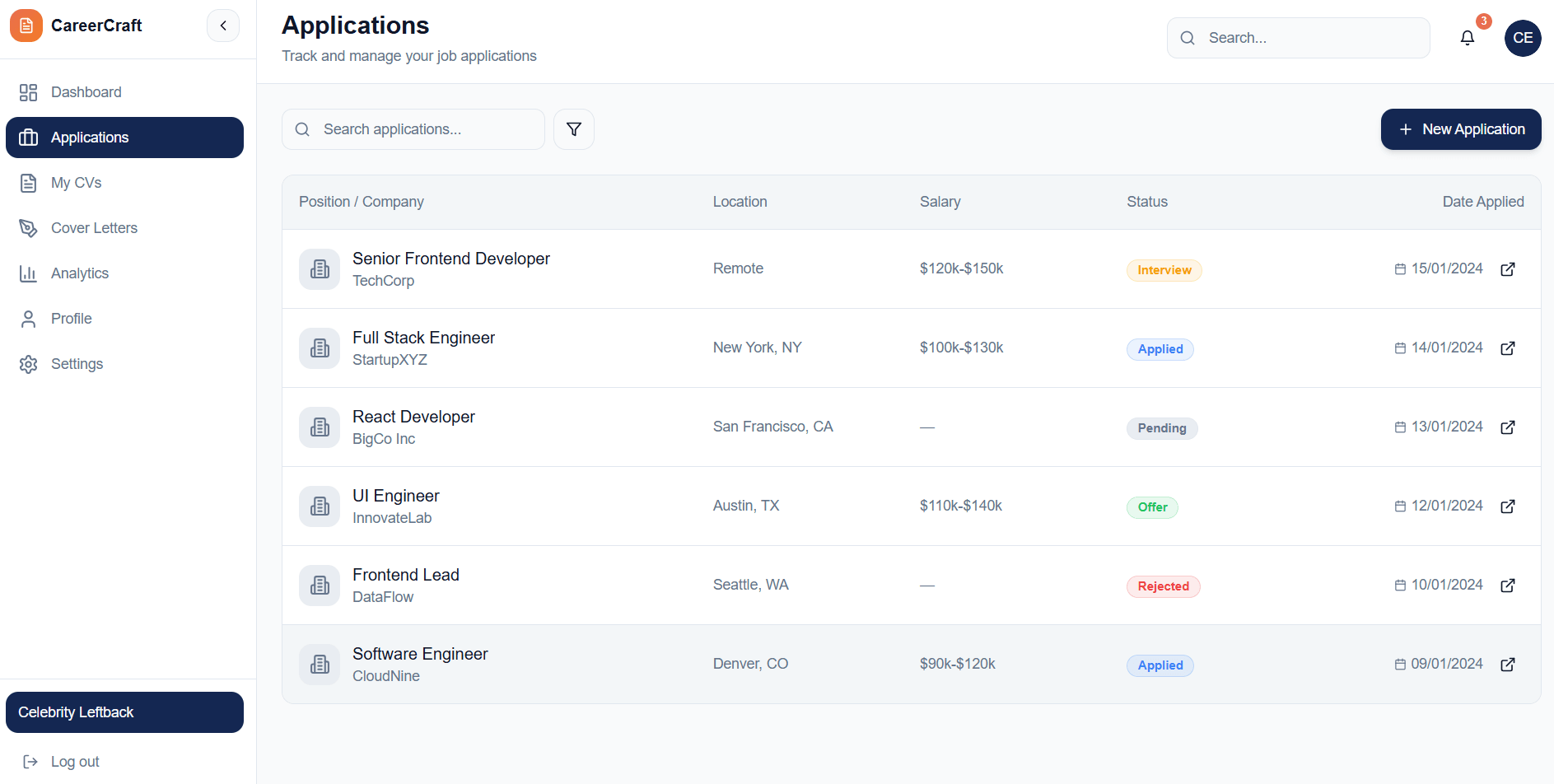
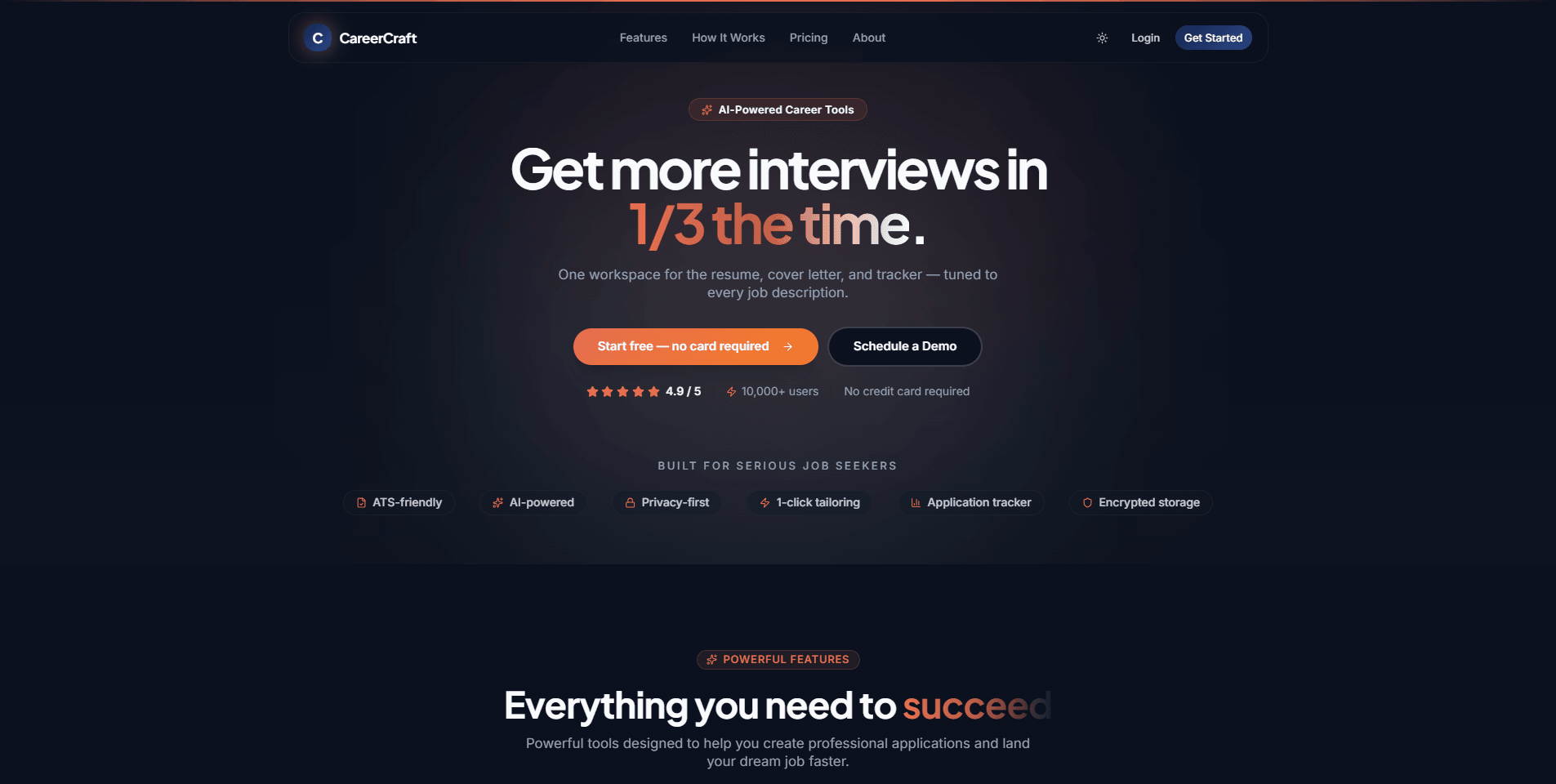
A full-stack career platform with application tracking, a CV builder, AI cover letters, job discovery, analytics and subscription billing — designed and built solo.
- Role
- Frontend Development
- Category
- Career Tech SaaS
- Status
- Live
- Year
- 2026
[build: careercraft-build-log] — Live
01 / The brief
One profile, every job-search tool connected
Job seekers were managing applications in spreadsheets, rewriting cover letters from scratch and losing track of which CV version was performing. The brief was to connect the whole search — tracking, documents, job discovery and analytics — to a single profile.
I had lived the problem as a product manager. The first version started as a landing page and grew into a full SaaS product.
“The AI had to read the user’s own CV and the target role — not a generic prompt.”
02 / Architecture
React, Supabase and a server-side AI layer
The front end is React 18 and TypeScript on Vite. Supabase handles authentication, Postgres data and row-level access. AI calls route through a Deno edge function that constructs the prompt from the user’s own CV data and the target job description, keeping the API key server-side.
Gemini 3 Flash generates cover letters in five tones, with per-paragraph rewriting so a user can iterate without starting over. JSearch supplies the listings; Recharts powers the analytics.
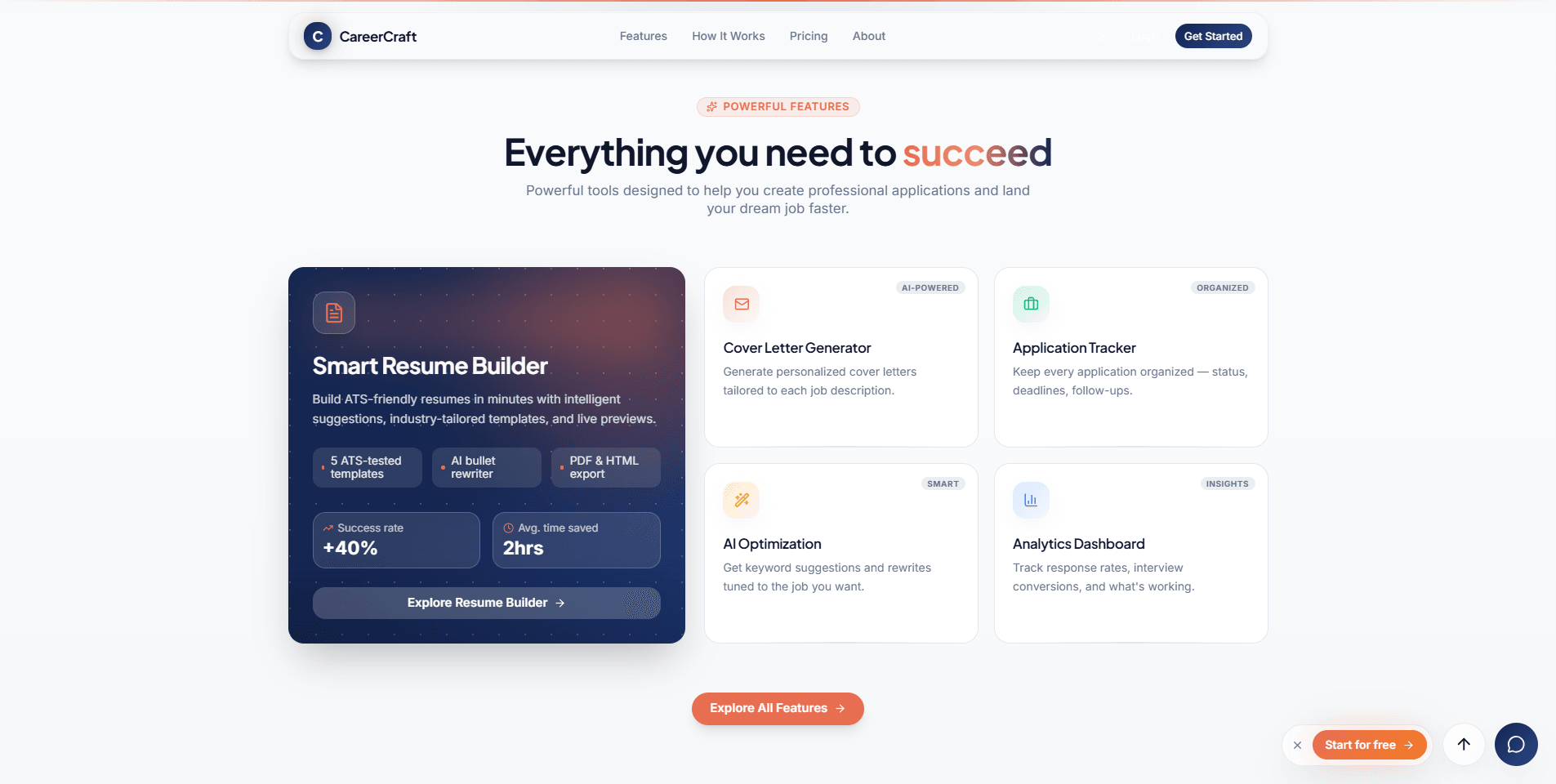
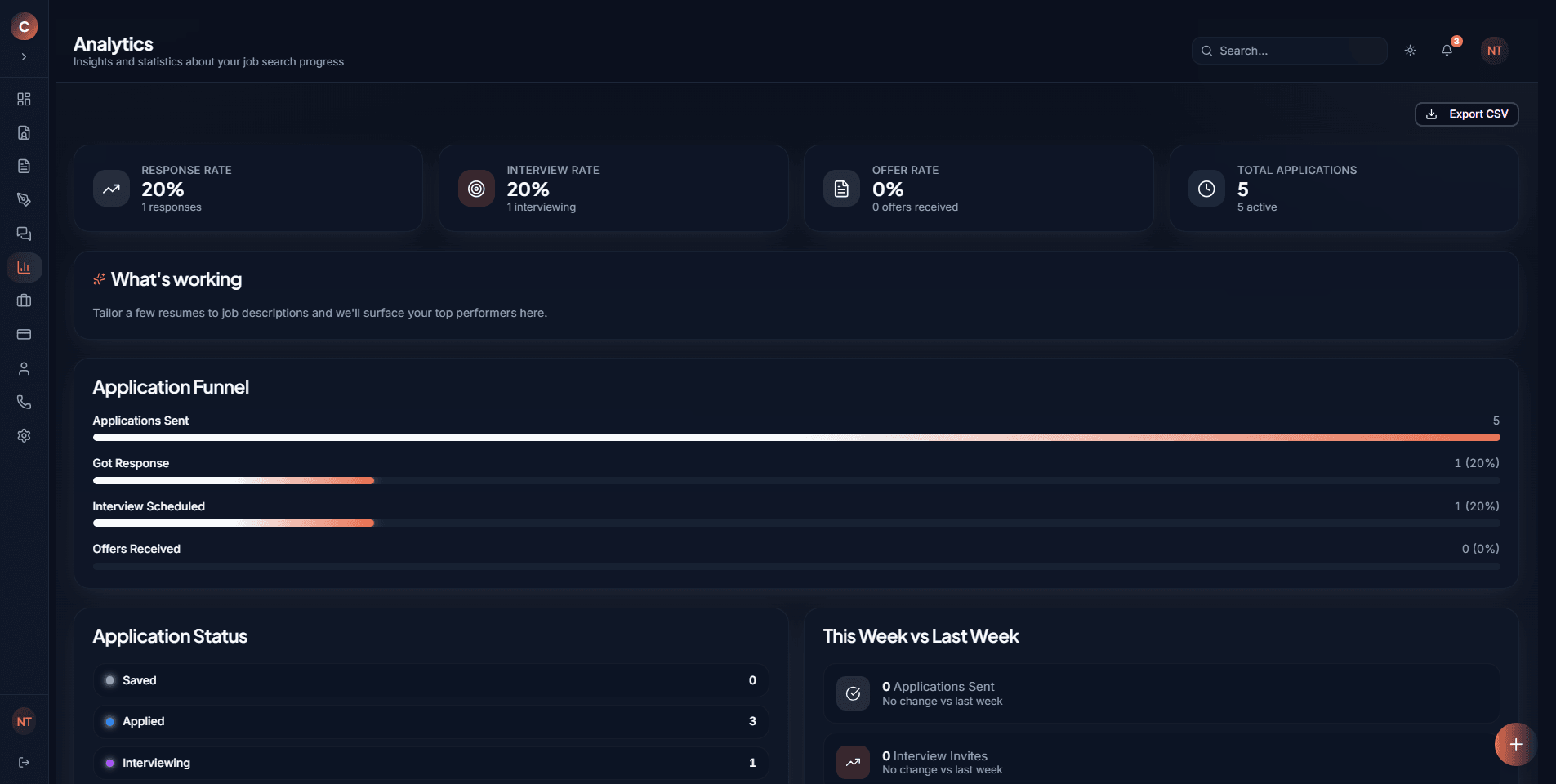
- Application tracker with six lifecycle statuses and follow-up deadlines
- CV builder with five templates, live ATS scoring and per-paragraph AI rewriting
- Cover-letter generator in five tones, with JD keyword matching
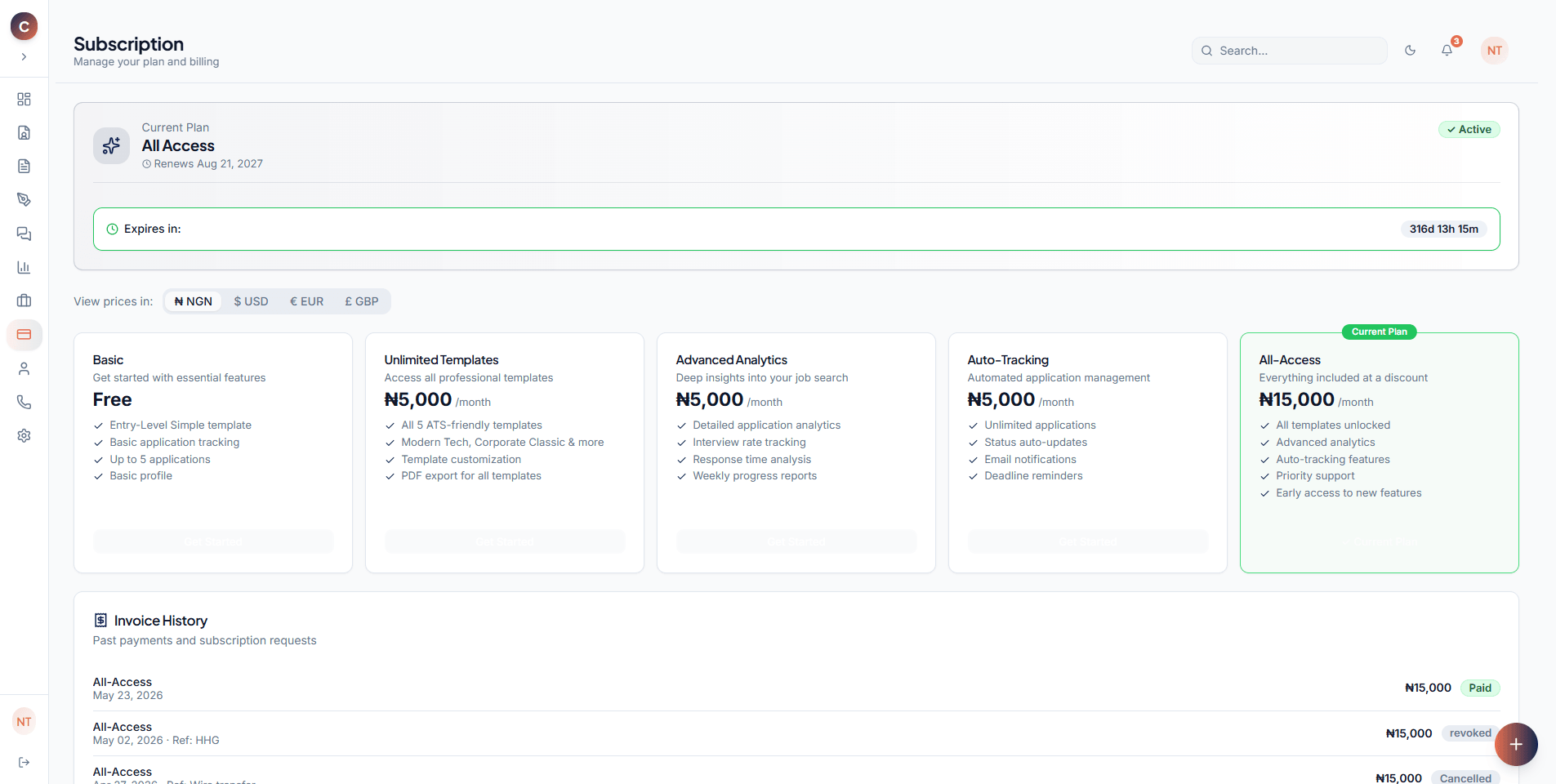
- Subscription billing with feature gating and an admin approval flow
03 / System map
Request path
React client
Vite · TypeScript
Supabase
Auth · Postgres · RLS
Deno function
Prompt builder
Gemini 3 Flash
Per-paragraph output
API keys stay server-side. JSearch supplies the job listings; Recharts renders the analytics.
04 / The hard parts
AI that reads the user’s actual CV
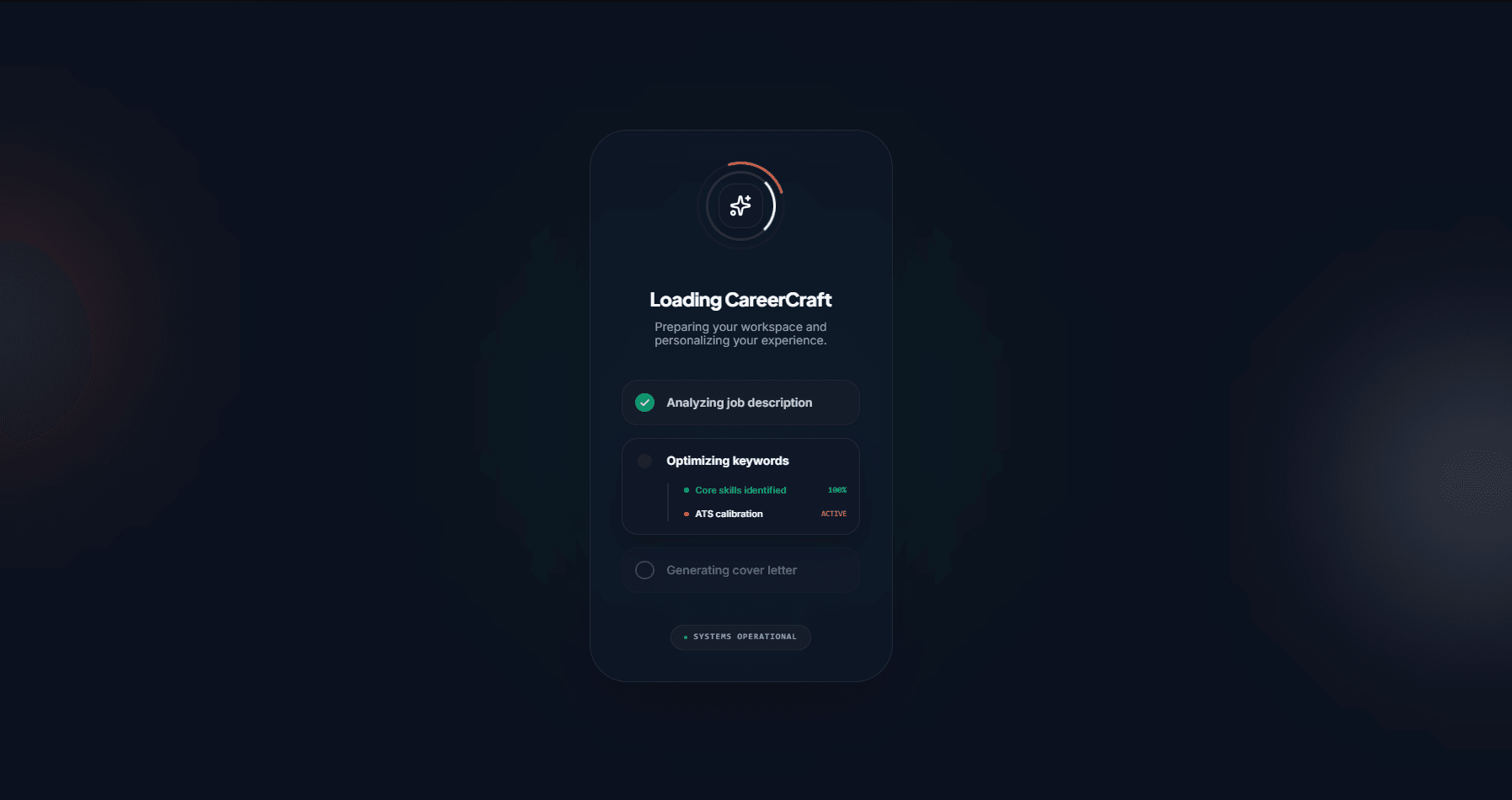
The AI layer had to feel personal, not generic. The function reads the user’s CV and the job description together, then generates each paragraph with a clear instruction. If the model fails, the UI degrades to a normal editor rather than losing the user’s work.
The PDF export took a week of iteration. The original spec also included a “rebuild my CV from scratch” AI feature; testing showed it kept breaking and the output was poor, so I cut it and shipped the cover-letter generator and ATS score instead.
05 / The proof
Live, with the whole loop connected
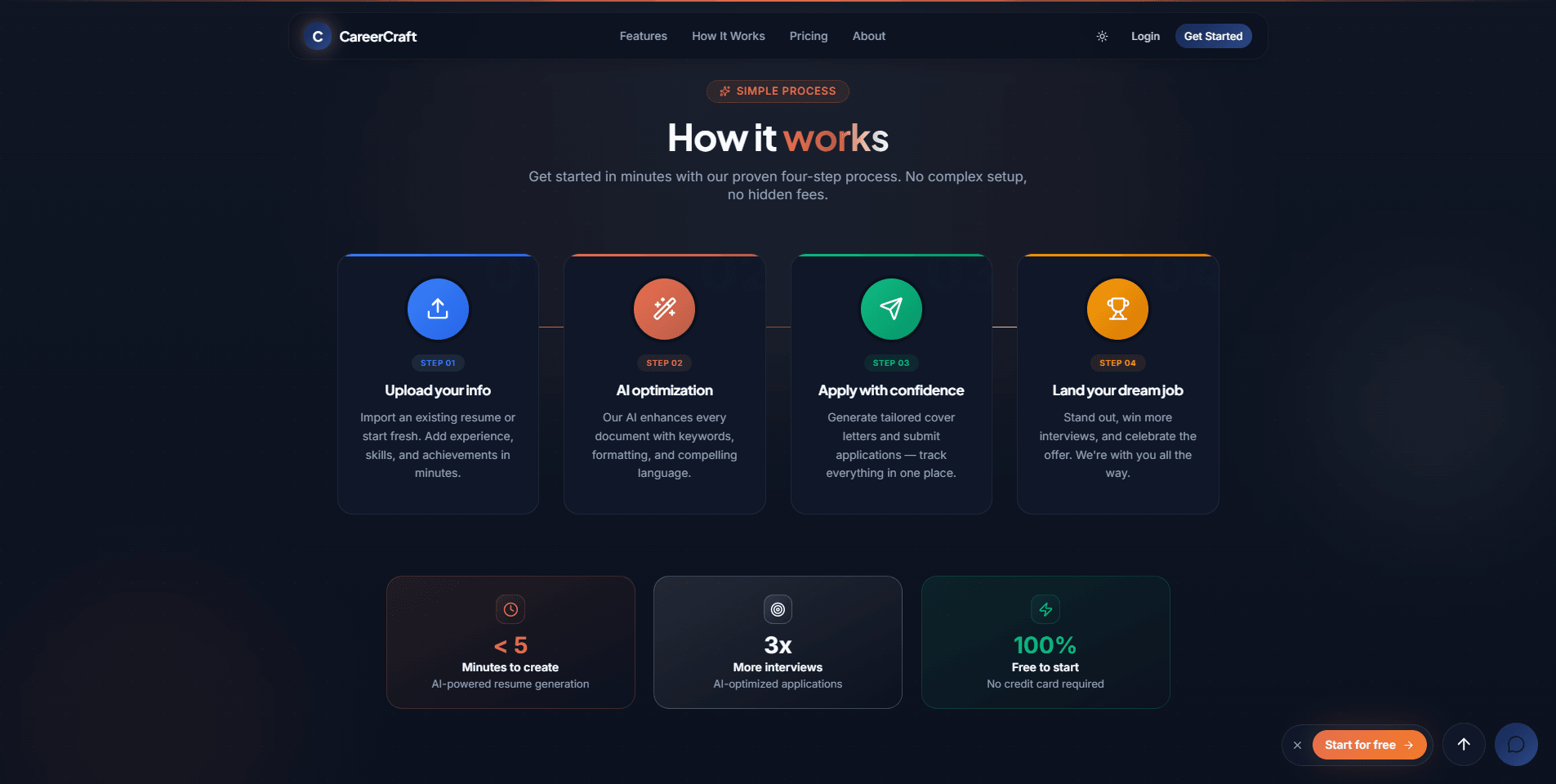
CareerCraft is live. The application tracker, CV builder, cover-letter generator and analytics all read from the same profile, so a CV built in one place feeds the cover letter generated in another.
- Live at careercraftsite.vercel.app
- 18 Supabase tables, Deno edge functions, Gemini 3 Flash
- Five CV templates, ATS pre-flight gate, per-paragraph rewriting
- Built Feb–Mar 2026 as my first coding project
06 / Selected screens
Inside the build
07 / What I’d change
The next layer is evaluation, not more features
The PDF export and the prompt evaluation layer are the two places I would invest next. The product proves the loop; the next step is measuring whether the generated letters actually improve response rates.
Built with
Next in The Build Log
The Hype Aesthetics
A commerce platform with bank-transfer checkout, pre-order deposits, a landed-cost calculator, Telegram monitoring and a Playwright suite.