03 / The Build Log / PropTech / Community SaaS
BigTown
Thirteen roles, one schema, no data leaks
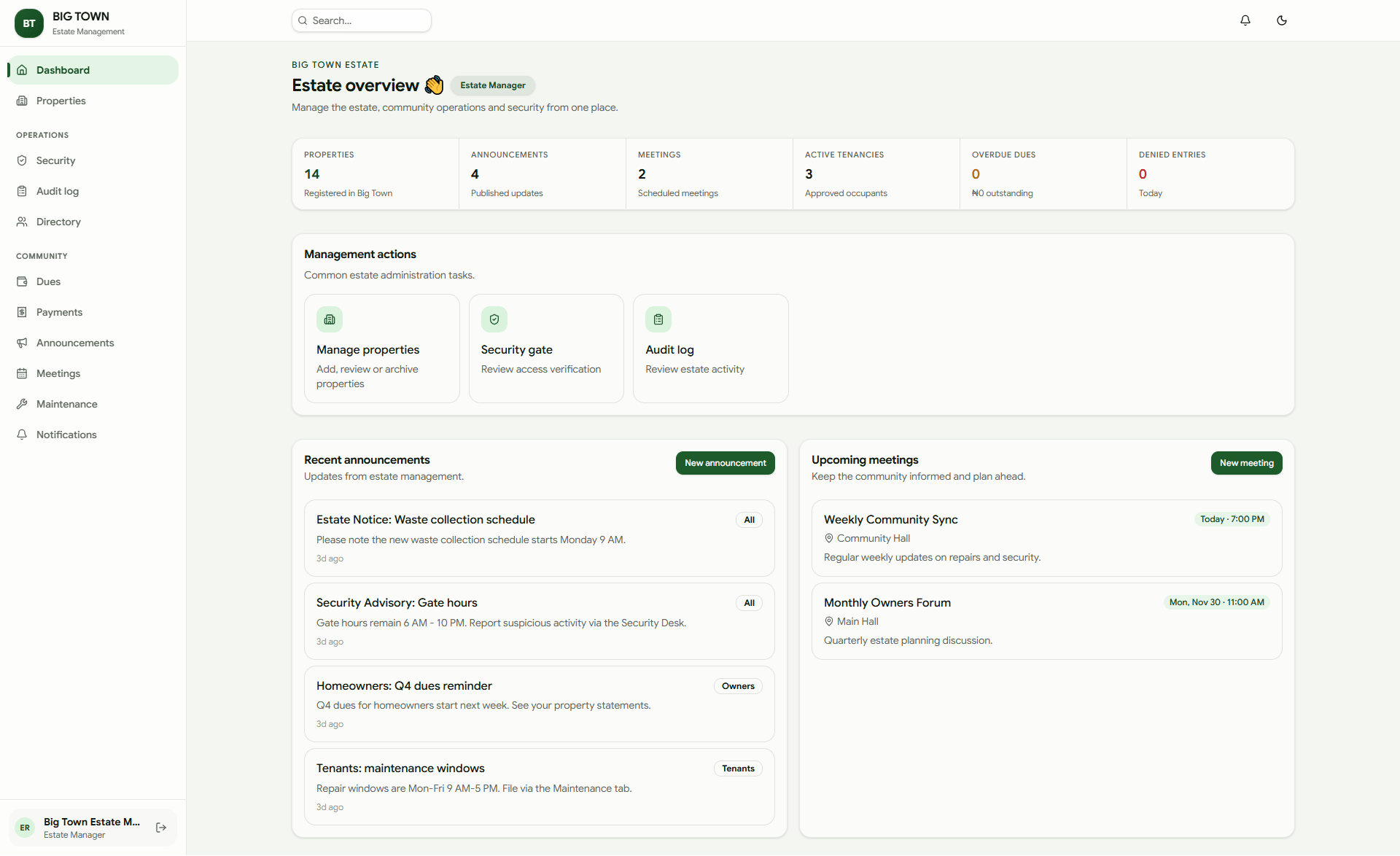
An estate operating system with 37 tables, 13 roles, estate-scoped RLS and a visitor-pass gate that has to be correct.
- Role
- Frontend Development
- Category
- PropTech / Community SaaS
- Status
- In build
- Year
- 2026
[build: bigtown-build-log] — In build
01 / The brief
Run an estate without WhatsApp and spreadsheets
The estate has more than 80 properties and a monthly meeting that always returns to the same security problem: visitors walking in without verification, no audit trail and no central record of who authorised what.
The brief was a community operating system: dues, visitor passes, announcements, meetings, maintenance and a full audit log, with role-appropriate access for every person in the estate.
“The security desk never sees resident financial data.”
02 / Architecture
Estate-scoped RLS is the product
Supabase and Postgres hold the domain: estates, properties, residents, dues, invoices, payments, visitor passes, meetings, maintenance requests, announcements, audit logs and roles. Every table is scoped to an estate, and RLS policies enforce the boundary in the database.
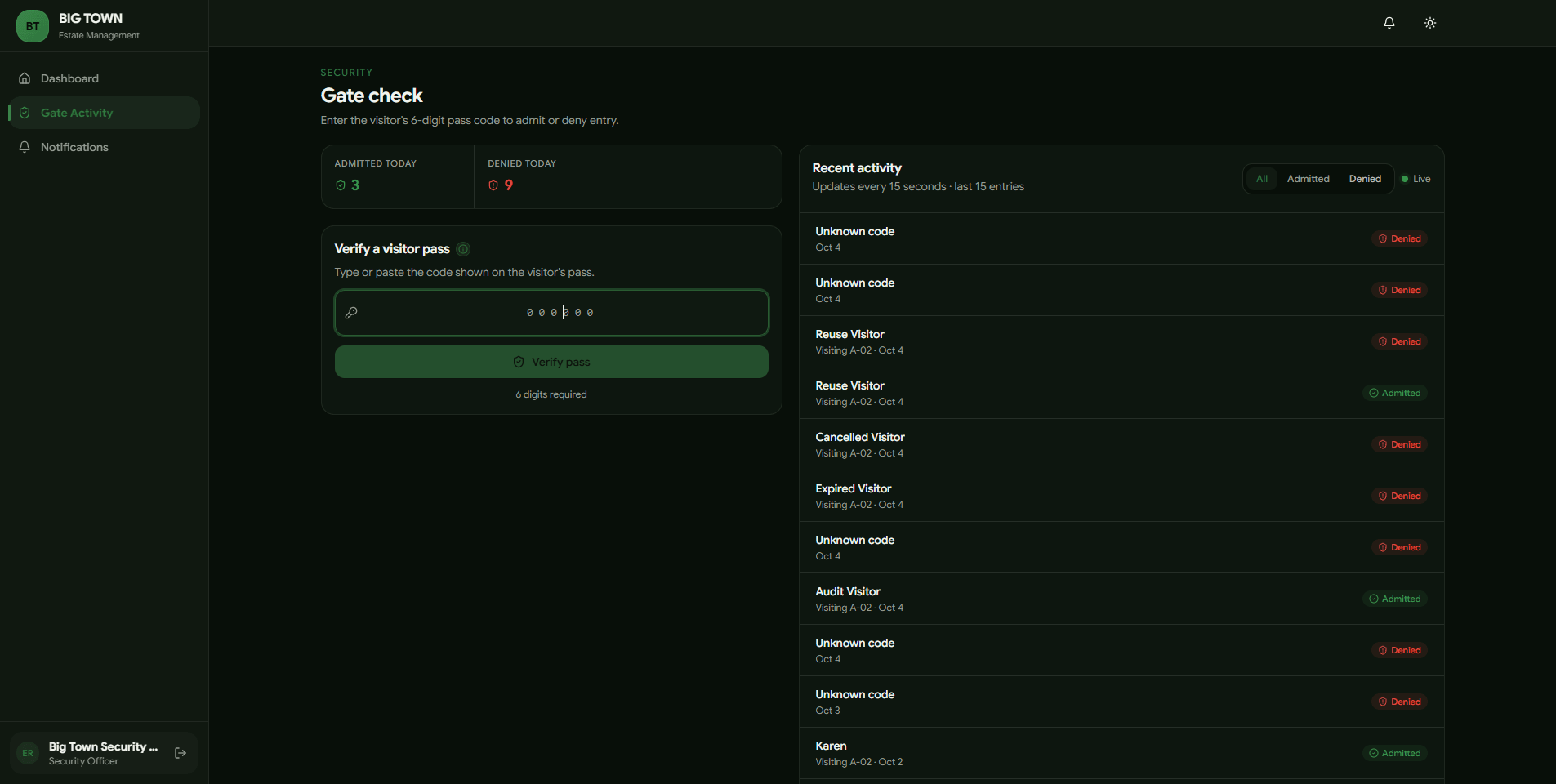
The gate admission path is a server-side transaction. It checks estate membership, approval status, the time window, revocation and prior use before recording an admit or deny. The audit trail is immutable.
- 13 roles mapped to the real estate structure
- Property-level dues with partial payments and late-fee logic
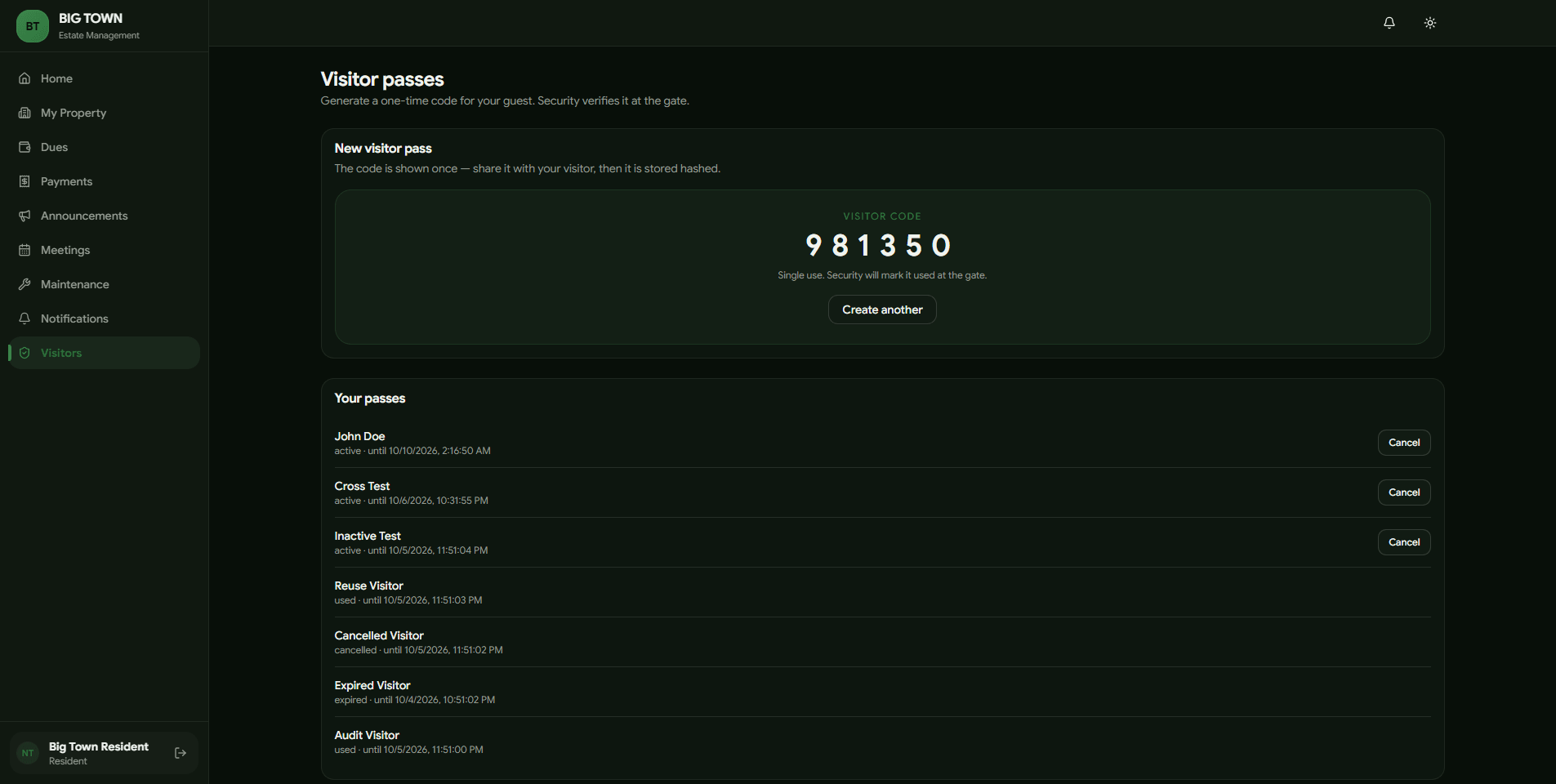
- Hashed one-time visitor codes with a time window
- Estate-scoped RLS on every query
03 / System map
Gate path
Resident
Generate code
Hashed pass
One-time · windowed
Gate transaction
Server-side checks
Admit / deny
Immutable log
The security desk never sees resident financial data. Estate-scoped RLS enforces the boundary below the interface.
04 / The hard parts
Role isolation, property-level dues, one-time codes
A security officer must never see resident financial data. A resident must be able to generate a pass without seeing the gate log. A finance officer needs the money trail. Each role gets its own navigation, data view and permission set — not a hidden button.
Dues attach to properties, not residents. Owners, tenants and caretakers change; the obligation does not. Visitor codes are hashed, shown once and checked as a server-side transaction, because a gate decision cannot be a client-side promise.
05 / The proof
In development — the hardest parts are built
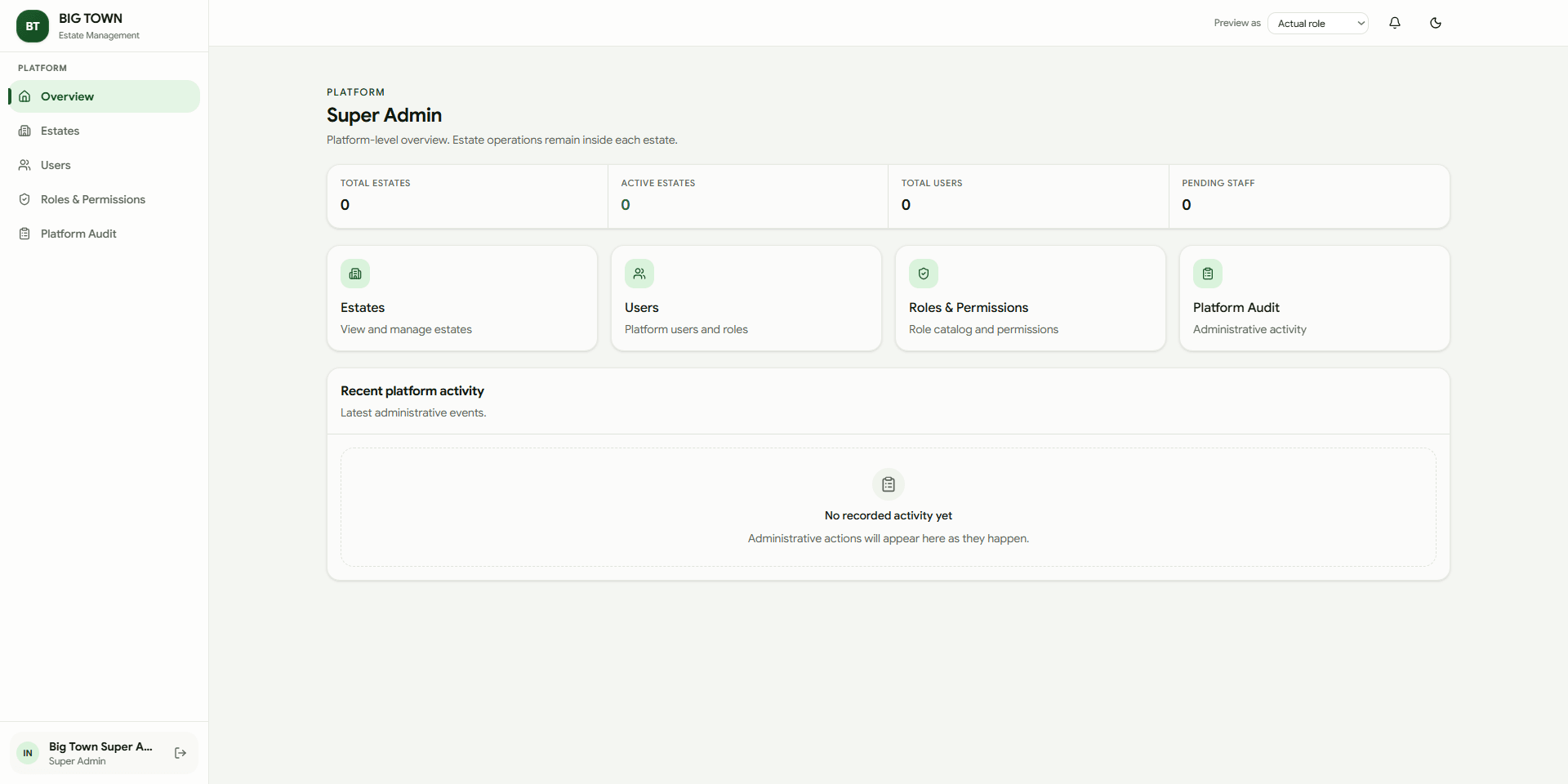
The visitor-pass gate, role system, announcement board, maintenance flow and financial architecture are built. The billing/payment integration and the super-admin multi-estate layer are still in progress.
- 37 tables, 30 Supabase migrations, full estate-scoped RLS
- 13 roles with isolated navigation and data views
- One-time hashed visitor codes with gate verification and audit trail
- Built September 2026, solo — design, frontend, database, migrations
06 / Selected screens
Inside the build

07 / What I’d change
The enum cast bug and the super-admin layer
An early enum cast bug made every new user default to “resident,” regardless of how they signed up. It taught me to separate the resident auth flow from the staff auth flow entirely. The super-admin multi-estate layer is the next architectural problem to finish.
Built with
Next in The Build Log
Kay's Deli
A mobile-first food ordering app with a SECURITY DEFINER order function, privacy-aware tracking and an admin intelligence dashboard.